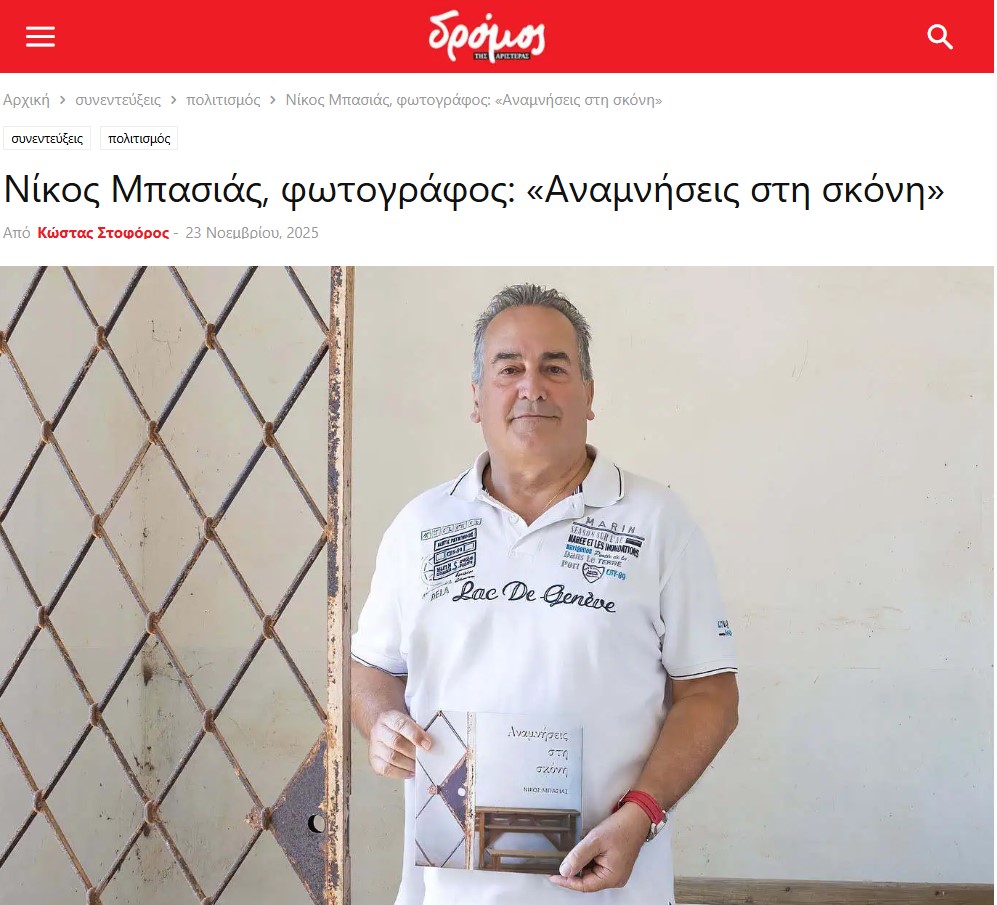

How was the idea for the album Memories in the Dust born?
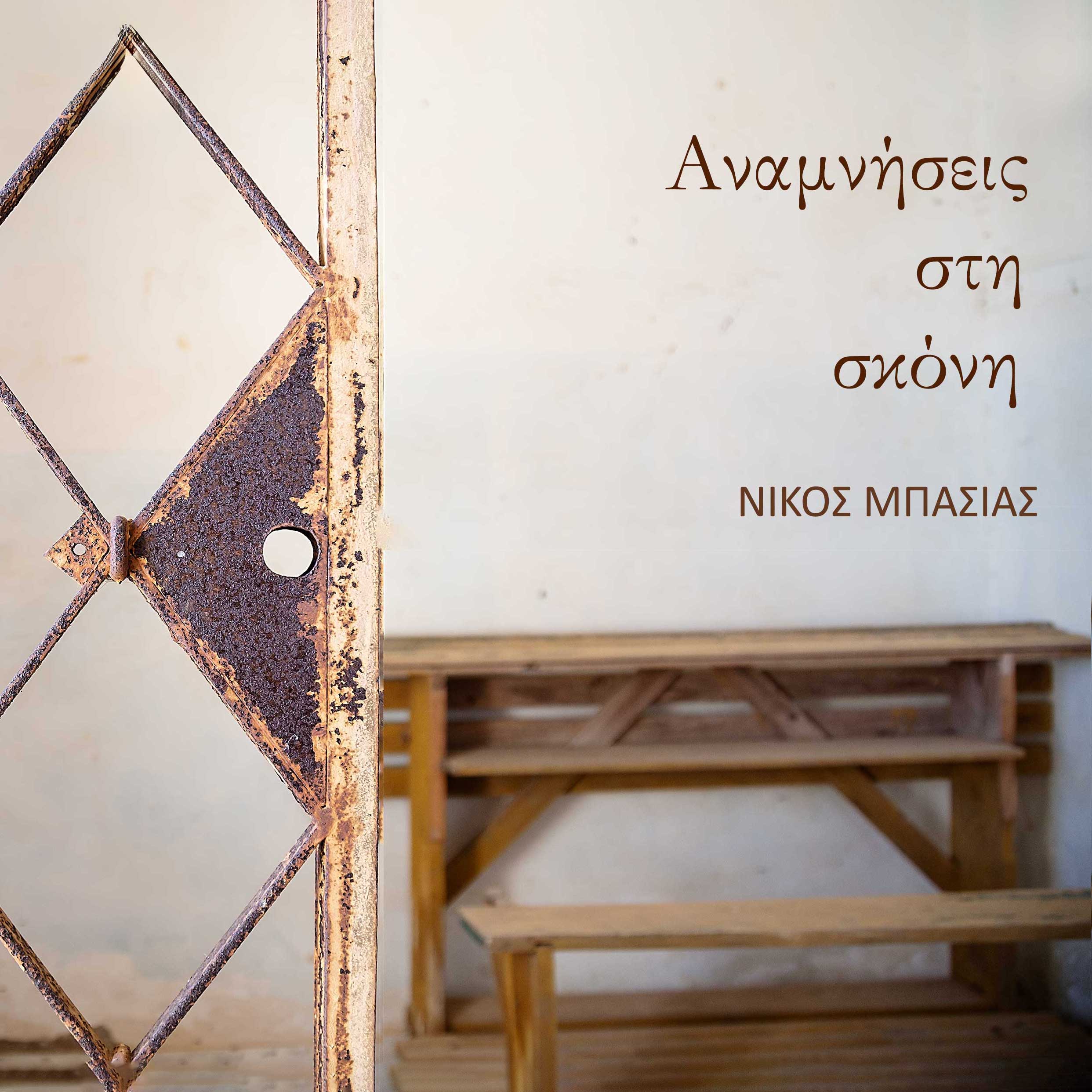
The album “Memories in the Dust” accompanies the photographic exhibitions “From North to South – In the Footsteps of Memory”, a journey through places that once pulsed with children’s voices — the primary schools of Greece, Cyprus, and Smyrna.
I didn’t photograph these schools in order to document them in a strictly factual way. I did it because I felt the need to preserve something intangible — their memory, the warmth they once held, the imprint of the people who passed through them.
I’m not interested in someone looking at my photograph and saying “what a beautiful composition.” I want them to look at it and say “I remember.” I want it to bring something back to them, to stir them a little.
The idea for the album “Memories in the Dust” was born from the need to create something that surpasses the ephemeral. I wanted the photographs to gain permanence, to keep living even after the exhibition lights go out. It is a meeting place: of image, memory, and emotion. Like holding a piece of memory in your hands, imprinted on paper. It’s an album you can hold, leaf through, keep beside you.
I had the honor and joy — and I would like to express my warm thanks — to receive the support of the Regional Unit of Chania, the Municipality of Kantanos-Selino, and the Municipality of Platanias for the publication of the album “Memories in the Dust”.
Beyond the artistic value of the photographs, it’s also a great journey. How did you locate all these schools?
Finding the abandoned schools was not easy, and reaching them was often even more difficult — sometimes even dangerous. I searched through sources in books and on the internet. Then I organized trips to visit these schools, and along the way I relied on the oral testimonies of local residents.
Every café was a stop. I would stop, have a raki or a coffee, talk with the regulars, and move on. Perhaps it was there, seeing the richness of oral testimony, that the idea was born to present my exhibitions in traditional cafés instead of galleries — which is exactly what I eventually did.
You also chose a different way to present the album, and now you are going to the historic “Kipos Café” in Chania. Would you like to tell us about these presentations?
The album was presented simultaneously in the same places where the exhibitions were held. In a way, they complemented each other. My choice to exhibit in cafés — from Chania to Sougia — is not only aesthetic. It is political. It is a statement about where art belongs. It belongs to everyone, not only to a trained audience. I wanted photography to sit at the same table as coffee and raki. To spark conversation. To provoke reactions, not applause. There, in the café, memory is not a spectator — it is a participant.
Now the next presentation will take place at the historic “Kipos Café,” a venue whose history dates back to 1870. This presentation will take on a new form. There will be an analysis of the album by me, based on my personal experiences during the photography process, as well as commentary from experts in architecture, education, and award-winning photographers. All of this will be combined and accompanied by live music.
Do you wish to convey a message as well? It feels a bit bittersweet that only memories remain from all these classrooms that were once full of life…
I don’t want this project to be just a beautiful photographic journey; I want it to be an opportunity to rethink our relationship with memory, education, and community.
I dream that some of these schools might come alive again — that they might become centers of culture, creativity, places of gathering.
Photography has shown us what we have lost; now we must decide what we can rebuild.
You write that an album functions as a kind of second life for its creator. What is this second life for this book?
I really like this question of yours.
Until now, I have spoken about the Second Life of the exhibitions From North to South. Some of the photographs from the exhibitions were not locked away in storage. They didn’t leave. They didn’t fall silent. Some remained on the walls of the cafés where they were exhibited, even after the exhibitions ended. They stay there, continuing to tell stories — they have gained a Second Life.
I interpret the Second Life of the album in an entirely different way. A book, a photographic album, functions as a kind of second life for its creator — it is the secret gateway to another life. This second life is not biological; it does not belong to the world of decay. It is spiritual, quiet, yet resilient.
When the writer-photographer puts down his pen, he knows that a part of him will keep breathing inside it. And when his body is gone, the pages become his new body; the photographs and words, his new voice.
And so, in the silence of a library, the writer-photographer is reborn — invisible yet vividly alive. And as long as there is even a single reader touching the pages, the creator never truly dies.
At this moment, the album Memories in the Dust is housed in 30 selected libraries — literally, if you look at them on the map, “From North to South” and from East to West.
This is the Second Life of my album.
INFO
Ιστοσελίδα: www.nikosbasias.com
Instagram: www.instagram.com/nikos.basias.photography
Facebook: www.facebook.com/mrsougia.chania
The book will be presented at the Historic “Kipos” Café in Chania on Thursday, November 27 at 20:00.